Economic Week Ahead: CPI and PPI to Shape Fed Rate Expectations
LONDON, UK / ACCESS Newswire / September 10, 2026 / The US labor market delivered a stronger signal in August, with

Press Release Disclaimer: This is a press release distributed through the XPR Media network. It has not been independently verified by our newsroom.

LONDON, UK / ACCESS Newswire / September 10, 2026 / The US labor market delivered a stronger signal in August, with payroll employment rising by 162,000, marking a significant turnaround from July’s decline. At the same time, the unemployment rate remained unchanged at 4.1%. Taken together, these figures suggest that labor-market conditions remain relatively firm, giving the Federal Reserve limited incentive to postpone a potential rate hike.
Expectations for the September FOMC meeting have already shifted following the employment data. Federal funds futures are currently pricing in a 59% probability of a rate increase at the September 15-16 meeting, compared with roughly even odds before the jobs report. That probability could still move substantially as additional economic data become available.
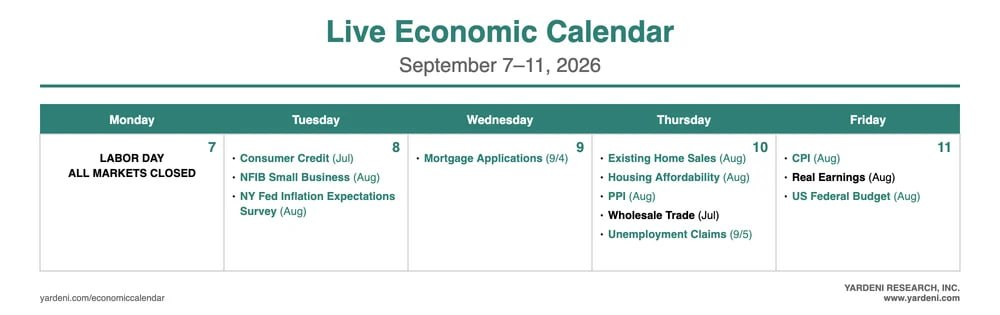
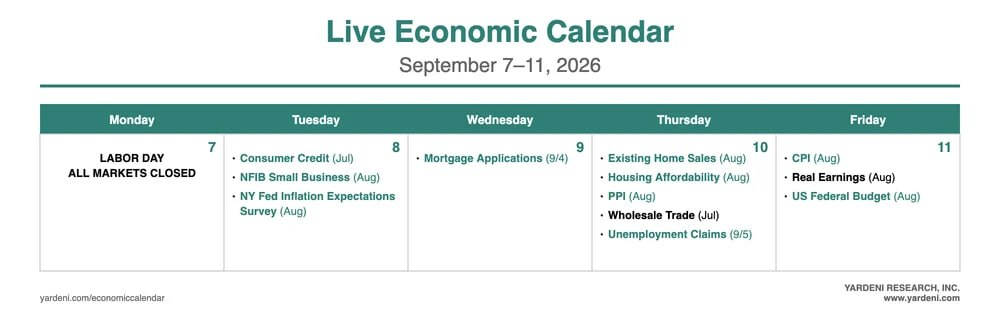
This week, inflation will take center stage. The August PPI report is due Thursday, followed by CPI on Friday. Internationally, markets will focus on China’s CPI and PPI figures on Wednesday and the European Central Bank’s policy meeting on Thursday. Investors will also receive earnings results from Oracle and Adobe on Thursday.
Here’s what to watch :
1. Inflation
The Cleveland Fed’s Inflation Nowcasting model estimates that August CPI increased by 0.36% month over month and 3.38% year over year. That would leave annual inflation broadly unchanged from July’s 3.4% reading.
The model also expects core CPI to rise 0.20% m/m and 2.38% y/y, compared with 2.5% in July. A softer-than-expected inflation report could once again reduce market expectations for a September rate increase. Conversely, a stronger inflation reading would make a September hike highly likely and could secure majority support at the September 15-16 FOMC meeting.
Price pressures in high-tech components are also continuing to move through the supply chain. PPI for Electronic Components & Accessories has increased 28.0% year over year, significantly faster than CPI for Computer Software & Accessories, which is up 21.2%.
The difference between the two measures indicates that elevated upstream costs have not yet fully filtered through to consumers and could continue adding pressure to final prices.
Record-high diesel fuel prices are another factor that could contribute to renewed upward pressure on inflation.
Meanwhile, headline PPI Final Demand eased to 4.7% y/y in July, down from 5.5% in June. Despite that decline, the broader inflation trend remains relatively persistent. PPI excluding trade services stood at 5.2%, while core PPI came in at 4.7%.
2. Unemployment Claims
Initial jobless claims totaled 206,000 for the week ending August 28, while the four-week moving average stood at 207,300.
These figures are broadly consistent with Friday’s employment report. The August data showed unemployment holding at 4.1%, accompanied by relatively broad-based job creation. More importantly, there are still no clear signs of a significant acceleration in layoffs.
The resilience of the labor market therefore remains an important factor for the Federal Reserve as policymakers weigh their next interest-rate decision.
3. Global
The European Central Bank is scheduled to meet Thursday, with financial markets assigning an almost certain probability to a rate increase from 2.25% to 2.50%.
However, the market’s main focus will likely be on ECB President Christine Lagarde’s guidance regarding the possibility of another increase at the October meeting. At present, markets are pricing in only a 31.5% probability of an additional hike in October.
China is also showing signs of stronger producer-level inflation. China’s PPI rose to 3.5% y/y in July, its strongest reading in several years. The increase was largely driven by higher prices for mining products and raw materials, which rose 16.4% and 6.1% y/y, respectively, amid continued pressure from global commodity prices.
Consumer inflation, however, remains subdued. China’s CPI was only 0.5%, suggesting that the recent reflationary trend is still concentrated at the factory-gate level rather than being reflected broadly in consumer prices.
Markets will therefore be watching Wednesday’s August data closely. Current expectations point to a modest acceleration in both China’s CPI and PPI.
By Farzad Vajihi – Financial Markets Analyst
Contact:
Company Name: Farzad Vajihi
Contact Person: Farzad Vajihi
Email: info@farzadvajihi.com
Address: London, United Kingdom
Website: https://farzadvajihi.com/
SOURCE: Farzad Vajihi
View the original press release on ACCESS Newswire