
The Brookbush Institute Publishes a NEW Course: ‘Evidence-based Resistance Training Model (EBRTM)’
The only comprehensively evidence-based education platform in fitness, performance, and physical medicine;

Press Release Disclaimer: This is a press release distributed through the XPR Media network. It has not been independently verified by our newsroom.

The only comprehensively evidence-based education platform in fitness, performance, and physical medicine; unprecedented levels of accuracy and effectiveness.
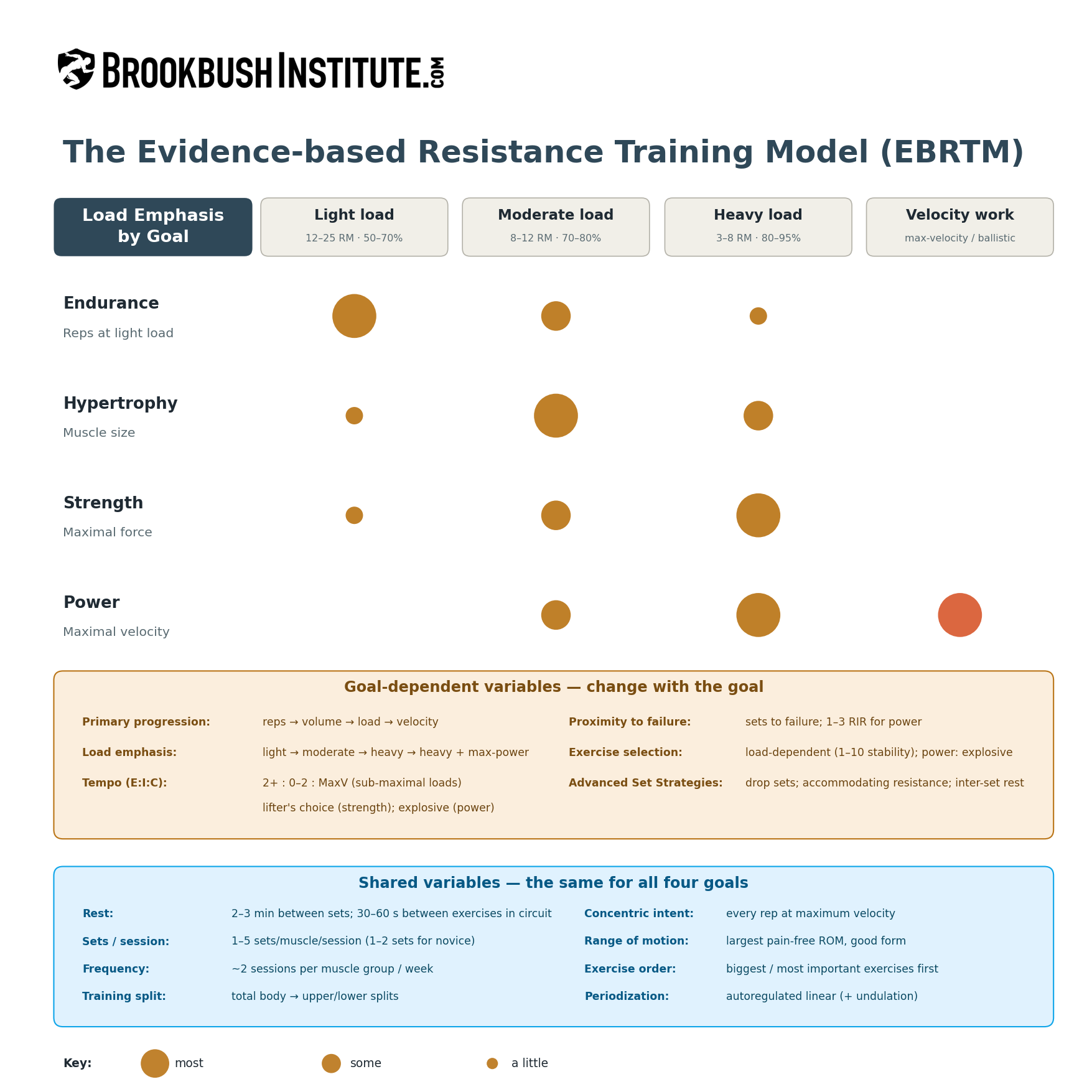
NEW YORK, NY, UNITED STATES, August 12, 2026 /EINPresswire.com/ — Snippet from the Course: Evidence-based Resistance Training Model (EBRTM)
Related Article: Best Resistance Training Approach: Evidence-Based Model for Program Design
Related Article: Circuit Training for Hypertrophy, Strength, and Power?
Evidence-based Resistance Training Model (EBRTM): Unprecedented Accuracy and Effectiveness
This course presents the first comprehensively evidence-based resistance training model for endurance, hypertrophy, strength, and power. The goal for developing this model was an unprecedented level of accuracy and effectiveness. This course consolidates the Brookbush Institute’s systematic reviews of every modifiable acute variable and the four goal-specific models derived from them into a single practical resistance training model.
Rather than relying on expert opinion, mechanistic hypotheses, traditional coaching models, older textbooks, or trending beliefs, this course integrates findings from approximately 1,500 peer-reviewed studies, with a focus on comparative research, to determine the best evidence-based recommendation for each acute variable and each goal. The central finding is that endurance, hypertrophy, strength, and power share the vast majority of their programming and differ only in a handful of goal-dependent variables, and surprisingly, those variables do not perfectly align with previously published acute variable tables and models.
Throughout the course, the emphasis is on outcomes over mechanisms. Mechanistic hypotheses can be useful for generating ideas, but when research directly compares practical programming decisions, those outcomes should determine the recommendation. This includes decisions related to load, repetition range, tempo, proximity to failure, rest intervals, circuit training, sets per muscle group, training frequency, set strategies, periodization, range of motion, exercise order, and exercise selection.
The model is organized into three parts. The first section covers acute variables for novice exercisers during the first 6 to 12 weeks of training, when the evidence suggests programming should remain largely the same regardless of long-term goal. The second section covers Shared Variables, the recommendations that remain largely the same across endurance, hypertrophy, strength, and power. The third section covers Goal-Dependent Variables, the small set of variables that differentiate the four goals, including the primary variable progressed, load emphasis, proximity to failure, tempo, exercise selection, and advanced set strategies. The course concludes with a brief review of the optimal corrective warm-up, including how movement preparation, mobility, activation, core exercise, and integration strategies fit into the model.
The manifold increase in evidence used to develop this model resulted in recommendations with a significantly higher probability of accuracy and effectiveness; however, a practical model is still needed to make those recommendations easy to scan, reference, and apply. This course reduces the conclusions from the Brookbush Institute’s systematic reviews into a single model demonstrating that most acute variable recommendations are shared across goals, and only a small number of key variables need to be modified for endurance, hypertrophy, strength, or power. This makes programming decisions faster, clearer, and easier to apply. For professionals who want to refine their programming further, the goal-specific model courses demonstrate where details can be dialed in and where flexibility is available. For expert-level decision-making, the acute-variable courses explain how each recommendation was developed and how to fine-tune programs for specific clients, patients, athletes, and situations. In short, this model makes the rules easy to apply, the goal-specific models make the details easier to adjust, and the acute-variable courses provide the depth needed for expert-level precision.
By the end of this course, you will be able to:
Apply the novice model for the first 6 to 12 weeks of training, when programming recommendations are largely the same regardless of long-term training goal.
Use the Shared Variables to quickly build the foundation of a resistance training program, including recommendations for rest intervals, circuit structure, range of motion, concentric intent, exercise order, sets per muscle group, training frequency, training splits, and periodization.
Modify the Goal-Dependent Variables, including the primary variable progressed, load emphasis, proximity to failure, tempo, exercise selection, and advanced set strategies, to match endurance, hypertrophy, strength, or power goals.
Create sophisticated resistance training programs for clients, patients, and athletes with the highest probability of success based on the available evidence.
Evaluate existing resistance training models, acute variable tables, and programs against the EBRTM, and identify where they do not align with the available research.
Frequently Asked Questions…
Check out the full article by clicking the link!
Brent Brookbush
Brookbush Institute
Support@BrookbushInstitute.com
Visit us on social media:
LinkedIn
Instagram
Facebook
YouTube
TikTok
X
Other
Legal Disclaimer:
EIN Presswire provides this news content “as is” without warranty of any kind. We do not accept any responsibility or liability
for the accuracy, content, images, videos, licenses, completeness, legality, or reliability of the information contained in this
article. If you have any complaints or copyright issues related to this article, kindly contact the author above.

Media gallery

