
The Great Debate: KoreLock Shares Best Practices for Lock Manufacturers Seeking to Build or Buy a Smart Lock Platform
Every lock maker and software company faces the “Build vs. Buy” decision. After a decade of building, KoreLock exists

Press Release Disclaimer: This is a press release distributed through the XPR Media network. It has not been independently verified by our newsroom.
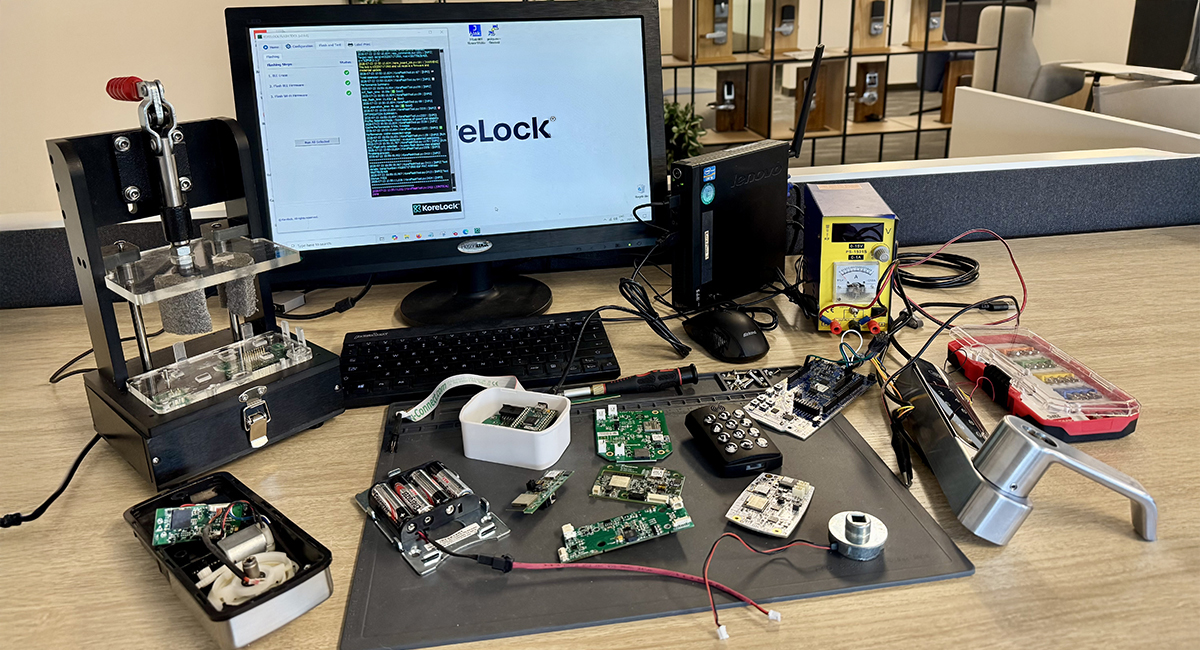

Every lock maker and software company faces the “Build vs. Buy” decision. After a decade of building, KoreLock exists so lock makers don’t have to do it alone.
GREENWOOD VILLAGE, CO, UNITED STATES, August 4, 2026 /EINPresswire.com/ — Every lock maker and software company eventually faces the “Build vs. Buy” decision. After a decade on the technology “build” side, KoreLock has learned some valuable lessons to help guide decision-making.
BUILD VS. BUY: THE SHORT ANSWER.
If a company’s strength is a particular layer of Smart Lock technology, build that part. For everything else, the practical answer is to buy a platform. For most companies, that means the entire technology stack. The real challenge isn’t the prototype; it’s the cost, time to market, and everything that follows.
LET’S BUILD? THE DEMO THAT FOOLS EVERYONE.
Most “let’s build it ” projects begin the same way: a firmware engineer gets a Smart Lock working over Bluetooth, then an app agency delivers a mobile app. The leadership sees the demo, the lock opens, and the company assumes the project is complete. But that demo is only about 10% of the work. The other 90% is making it succeed continuously on thousands of installed devices and after multiple OS updates. The reality is that “build it” means running a second new company inside the developing company, one that needs ongoing staff for firmware, cloud, apps, security, and manufacturing tools.
WHY NOT BUILD: A TOUR OF THE 90%.
Bluetooth in the field is far trickier than in the lab. While a team runs a few tests, real customers use hundreds of devices across many OS versions, each with its own quirks. Annual OS updates routinely break things. Many issues only surface after launch, when thousands of locks are deployed, with technology bugs that cannot be anticipated before launch.
Firmware updates are a product in themselves. Without reliable over-the-air updates, bugs linger or require costly returns. True OTA solutions need staged rollouts, safe recovery, and cryptographic verification. Otherwise, the risk is security vulnerabilities. Building this update pipeline is complex and must be ready before the first security patch.
A deployed fleet needs accurate monitoring. Monitoring dashboards often confuse lost connectivity with intentional user actions like turning off Wi-Fi. Buying a platform provides smarter monitoring, distinguishing real issues from false alarms, saving the support team time and frustration.
Credential requirements are always changing. What was once just keypads and cards now includes mobile keys and wallet credentials. Getting into Apple or Google Wallet requires lengthy certifications and approvals. The Aliro standard is also emerging, so what is built must adapt.
Mobile app maintenance is relentless. OS targets and frameworks change constantly, requiring ongoing engineering to keep a Smart Lock product running. This is a permanent cost, not a one-time investment.
Power management is crucial to product success. All of these systems must also run on battery for a year, operating when radios wake, sleep, and advertise. KoreLock’s patented Wi-Fi power control technology solves for the complexity of this challenge.
WHY TO BUY: WHAT “THE PLATFORM” ACTUALLY IS.
Most “Build vs. Buy” debates focus on a few pieces: the firmware, an app, maybe the cloud. In reality, a Smart Lock platform has ten complex layers:
1. Embedded lock hardware: Controller boards built for long life, multiple radios, and reliable battery performance.
2. Reader hardware: Keypads, NFC, Bluetooth, and more; complex to design and critical for security, especially since they sit on the unsecured side of the door.
3. Lock firmware: Manages credentials, schedules, hardware logic, and power across different models.
4. Cloud infrastructure: Keeps a real-time digital twin of every lock, guarantees event delivery, and includes a robust web stack, APIs, and failover, all requiring ongoing operations and constant attention.
5. Credential ecosystem: From PINs and cards to mobile keys and wallets, credentialing requires secure, flexible integrations, often relying on partners with access to closed ecosystems like Apple and Google.
6. Device and cloud security: Security isn’t just encryption; it’s secure boot, certificate management, hardware-backed keys, end-to-end encrypted communications, and a dedicated security response process for the product’s lifetime.
7. OTA management: Ongoing, secure updates with rollback, staged rollouts, and constant maintenance, crucial for security and reliability over time.
8. Partner APIs: Well-documented, stable interfaces for property management and access software.
9. White-label apps: Your brand, maintained through constant OS changes.
10. Factory and QA systems: Automated tools to program, test, and verify hardware at scale before shipping.
Most of these layers aren’t “just software.” They are embedded engineering, RF design, manufacturing, and more. Lock makers often underestimate software; software companies underestimate hardware and operations. Specializing and partnering is the smarter route.
BUILD VS. BUY: THE MATH THE BIG GUYS CAN’T DO.
Consumer demand for connectivity keeps growing, from front doors to cabinets to safes. Big lock brands need massive volume, millions of units, to justify building the tech stack themselves. Yet niche lock products (10,000–25,000 units/year) cannot afford the required tech stack. IoT Smart Lock platforms exist so that niche lock brands and manufacturers can compete. A turnkey Smart Lock technology platform, shared across products and layers, allows lower-volume, niche products to reach market quickly and cost-effectively, without sacrificing advanced features.
WHEN YOU MIGHT WANT TO BUILD ANYWAY.
Sometimes, building makes sense if a specific Smart Lock layer is part of a company’s core value. But building the whole stack only makes sense if the company is in the business of being a platform company.
WHEN YOU SHOULD BUY, AND WHAT TO LOOK FOR IN A SMART LOCK PLATFORM PARTNER.
When choosing a platform partner, look for proven large-scale deployments, real OTA capabilities, complete credential support (including wallets and Aliro), reader hardware expertise, robust factory/test infrastructure, relevant certifications, and responsiveness to your product needs.
ABOUT KORELOCK, INC.
KoreLock, Inc. is a B2B IoT smart lock technology platform for lock manufacturers and access control providers, offering embedded firmware, PCBAs, white-label mobile and web apps, and cloud SaaS. Learn more at korelock.com.
Robert Goff
KoreLock, Inc.
+1 303-681-5785
email us here
Visit us on social media:
LinkedIn
Instagram
Facebook
YouTube
HOW IT WORKS: THE KORELOCK TECHNOLOGY PLATFORM
Legal Disclaimer:
EIN Presswire provides this news content “as is” without warranty of any kind. We do not accept any responsibility or liability
for the accuracy, content, images, videos, licenses, completeness, legality, or reliability of the information contained in this
article. If you have any complaints or copyright issues related to this article, kindly contact the author above.

Media gallery

