As Senior Care Costs Approach $100,000 to $160,000 Annually by 2030, Electronic Caregiver Offers AI-Driven Home Care Support for About $10 a Day
With traditional aging-care expenses climbing beyond the reach of millions of American families, Addison Care

Press Release Disclaimer: This is a press release distributed through the XPR Media network. It has not been independently verified by our newsroom.


With traditional aging-care expenses climbing beyond the reach of millions of American families, Addison Care introduces an affordable combination of artificial intelligence, continuous health engagement, remote monitoring, and live care support in the home.
LAS CRUCES, NM / ACCESS Newswire / October 28, 2026 / As American families confront rapidly escalating costs for assisted living, in-home caregiving, and nursing home care, Electronic Caregiver, Inc. (ECG), developer of the Addison Care AI-driven healthcare platform, is advancing a new model designed to make daily healthcare support more accessible and affordable.
According to the 2025 CareScout Cost of Care Survey, formerly the Genworth Cost of Care Survey, the national median annual cost of assisted living has reached approximately $74,400, while nonmedical in-home caregiving at 44 hours per week costs approximately $80,080. A private nursing home room averages approximately $129,575 annually.
At an illustrative 4% annual rate of increase, those costs could reach approximately $90,500, $97,400, and $157,600, respectively, by 2030.
Against this backdrop, Electronic Caregiver offers Addison Care to private-pay subscribers for $299 per month, approximately $9.83 per day, with no upfront payment under its zero-down subscription option.
The Growing Gap Between What Families Need and What They Can Afford
For decades, traditional home-care agencies have encountered a persistent challenge: families seeking help for aging parents or loved ones often cannot afford the number of caregiving hours they need.
At the national median rate of approximately $35 per hour, even 20 hours of professional nonmedical caregiving per week can cost roughly $3,000 per month.
For many families, these expenses are comparable to taking on a second mortgage.
Meanwhile, older adults living independently may require ongoing medication reminders, chronic disease support, health monitoring, companionship, caregiver communication, and access to medical assistance without necessarily requiring full-time hands-on care.
“Families are being presented with an increasingly impossible financial equation,” said Anthony Dohrmann, Founder and CEO of Electronic Caregiver. “They want to protect their parents, support independence, and maintain quality of life, but conventional care can cost thousands of dollars every month. We believe the healthcare industry must create an entirely new level of affordability and accessibility. That’s what we’ve spent years building with Addison Care.”
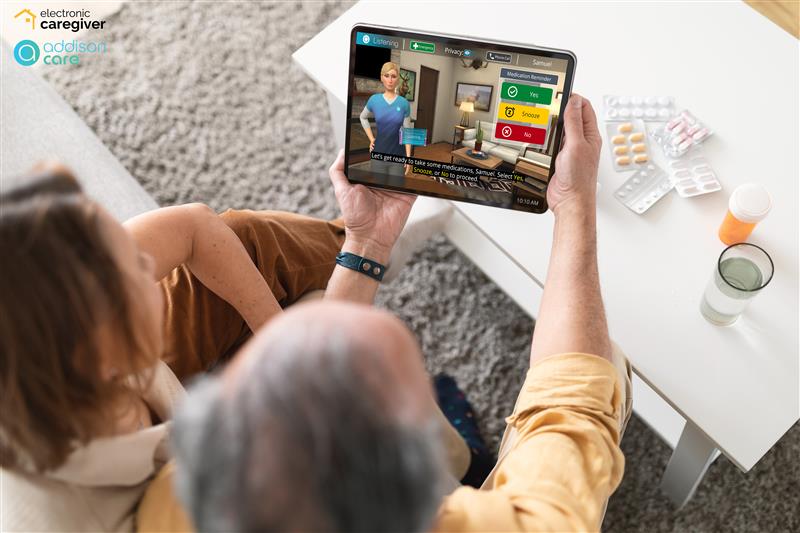
Addison Care: An Intelligent Healthcare Support System in the Home
Addison Care combines an interactive AI-powered care interface with connected health monitoring, medication adherence support, personalized engagement, caregiver connectivity, and live remote care services.
Depending on the subscribed service configuration, the platform supports daily health engagement, vital-sign collection, medication reminders, family caregiver communications, health assessments, virtual healthcare access, and escalation coordination when concerning changes are identified.
Unlike conventional standalone medical alert devices or health applications, Addison is designed to establish an ongoing interactive relationship with individuals in their homes.
Electronic Caregiver reports that early Addison users averaged approximately 6.1 hours of monthly patient interaction, inquiry, and care management activity, alongside approximately 47 minutes of monthly direct TeleCare activity in the company’s reported operating cohorts.
These engagement figures reflect management’s historical operating observations and are not a guarantee of individual utilization or clinical outcomes.
A Different Economic Model for Aging in Place
At $299 per month, Addison costs approximately $3,588 annually.
By comparison, the national median annual cost of assisted living is approximately $74,400, and a private nursing home room averages approximately $129,575.
Addison does not replace necessary hands-on caregiving, residential care, skilled nursing, or emergency medical treatment. Rather, it provides a lower-cost layer of ongoing support that can complement professional services or help individuals who can safely remain at home access additional assistance.
For home-care agencies, the platform also creates an opportunity to serve families who cannot afford conventional hourly care packages, while maintaining connections with prospective customers who may require additional hands-on services in the future.
What Does $10 a Day in Virtual Care Actually Deliver?
“This is not a $10-a-day emergency button, medical alert device, or chatbot. It is a comprehensive virtual caregiving service that brings together continuous daily assistance, human care engagement, emergency protection, physician access, and intelligent awareness of daily living, all designed to help people remain safer, healthier, and more independent at home,” said Anthony Dohrmann, Founder and CEO of Electronic Caregiver.
The comprehensive Addison Care experience includes:
- 24/7 Virtual Caregiving: Personalized assistance with medication routines, wellness checks, treatment adherence, appointments, reminders, and companionship.
- Personalized Health Monitoring: Connected health devices support vital-sign collection, health tracking, and ongoing wellness engagement.
- 24/7 Emergency Response and Protection: Voice-activated assistance, wearable micro-GPS technology, automatic fall detection, and trained emergency response personnel.
- Privacy-First Activity Monitoring: Designed with privacy at its core, Addison’s in-home activity monitoring uses no cameras and no listening devices . The technology monitors daily routines and activity patterns, identifying unusual inactivity and meaningful changes while preserving personal privacy.
- 24/7 Physician On Demand: Convenient access to physician services for appropriate nonemergency health concerns.
- Twice-Monthly Human TeleCare Engagement: Two approximately 20-minute conversations with trained personnel providing wellness assessments, human connection, and care coordination.
- Family and Caregiver Insights: Visibility into daily wellness, activity trends, and potential changes, keeping families informed and connected.
When concerns are identified, trained personnel can help coordinate appropriate follow-up with designated family members, healthcare providers, physician services, or emergency response personnel.
Together, these services provide a proactive approach to daily care, combining personalized virtual assistance, human support, and privacy-first monitoring to help individuals maintain independence and give families greater peace of mind.
The Affordability Challenge Is Expected to Intensify
Illustrative projections based on 2025 national median costs and 4% annual increases demonstrate the scale of the challenge:
| Care model | 2025 annual cost | Illustrative 2030 cost |
| Adult day care | $24,700 | $30,100 |
| Assisted living | $74,400 | $90,500 |
| In-home caregiver, 44 hours/week | $80,080 | $97,400 |
| Nursing home, shared room | $114,975 | $139,900 |
| Nursing home, private room | $129,575 | $157,600 |
| Addison Care, current subscription | $3,588 | $3,588 * |
The 2030 figures are illustrative calculations, not CareScout forecasts. Addison’s current price is held constant for comparison only and is not a future price guarantee. Care settings and Addison provide different levels and types of service.
Building the Infrastructure for the Next Generation of Healthcare
Founded in 2009, Electronic Caregiver has spent approximately 17 years developing technologies and services intended to extend healthcare beyond traditional clinical environments.
Its Addison Care platform integrates AI-driven engagement, connected health technologies, human TeleCare operations, longitudinal patient information, and healthcare coordination capabilities.
The company is expanding its distribution through home-care organizations, participating healthcare providers, and eligible payer-supported programs.
Dohrmann added:
“The future of healthcare cannot depend exclusively on building more facilities and finding millions of additional healthcare professionals. We must use intelligent technology to extend the reach of the professionals we have, support family caregivers, and help people manage their health where they spend most of their lives.
“Our vision is that AI-driven care support will eventually become as commonplace in the home as broadband connectivity. But the transformation has to begin with affordability. At approximately $10 per day, Addison represents our commitment to making meaningful daily support accessible to far more families.”

About Electronic Caregiver, Inc.
Electronic Caregiver, Inc., headquartered in Las Cruces, New Mexico, is a digital health technology and services company developing AI-driven solutions for healthcare engagement, remote monitoring, care coordination, and aging in place.
Its Addison Care platform combines interactive artificial intelligence, connected health technologies, caregiver engagement, and live remote care services to support individuals, families, and healthcare organizations.
For more information, visit Electronic Caregiver’s official website.
Media Contact
Electronic Caregiver, Inc.
Las Cruces, New Mexico
media@ecg-hq.com
(575) 649-7808
Source and methodology: CareScout 2025 Cost of Care Survey, released March 2026. National median figures; adult day care and in-home care reflect specified utilization assumptions. Illustrative 2030 costs are calculated using five years of 4% annual increases. Pricing and services for Addison Care are subject to applicable subscription terms and availability.
SOURCE: Electronic Caregiver, Inc.
View the original press release on ACCESS Newswire