Technical Report: Assessing Hydraulic Cylinder Specifications to Mitigate Equipment Failures
HEFEI, ANHUI, CHINA, July 30, 2026 /EINPresswire.com/ -- According to data from the International Organization for

Press Release Disclaimer: This is a press release distributed through the XPR Media network. It has not been independently verified by our newsroom.
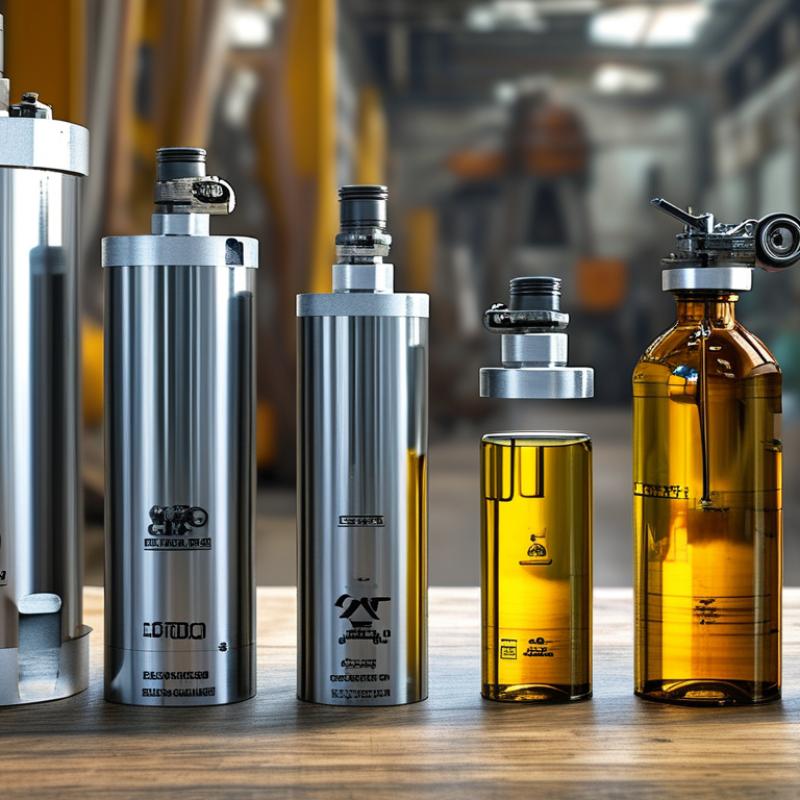

HEFEI, ANHUI, CHINA, July 30, 2026 /EINPresswire.com/ — According to data from the International Organization for Standardization (ISO), approximately 40% of industrial machinery failures stem from improper component selection. Understanding technical specifications and operational demands prior to procurement remains a critical factor in maintaining system reliability and minimizing downtime.
When determining hydraulic cylinder selection, variables such as pressure capacity, dimensional specifications, and operational environment dictate performance suitability. Heavy-duty industrial machinery requires cylinders capable of sustaining high operating pressures, whereas light-duty applications utilize compact configurations. Mismatched components increase the risk of operational inefficiencies and unscheduled maintenance.
Component compatibility remains a critical parameter in hydraulic design. Utilizing an improper cylinder configuration can induce system inefficiencies, mechanical stress, and component degradation. Technical documentation and industry engineering standards provide baseline guidelines to prevent performance bottlenecks.
Understanding Hydraulic Cylinder Functionality and Mechanics
Hydraulic oil cylinders convert fluid power into linear mechanical force by utilizing pressurized hydraulic fluid to actuate an internal piston. Assessing system requirements involves calculating required force output and stroke length parameters. Operating pressure ratings must align with system loads to maintain structural safety and operational integrity.
Environmental factors, including ambient temperature fluctuations, directly influence fluid viscosity and seal behavior. Routine maintenance schedules help prevent component degradation and allow operators to track performance parameters for early anomaly detection. Proper installation alignment and integration with adjacent mechanical components prevent physical binding and fluid leaks.
Application Analysis and Operating Requirements
Identifying specific application requirements begins with defining operating conditions such as working temperature ranges, pressure thresholds, and environmental exposure. These factors determine material selection and fluid compatibility. Load capacity calculations and expected duty cycles establish baseline structural requirements to resist mechanical fatigue under continuous operation.
Stroke length parameters govern extension and retraction limits required for specific machinery functions. Proper fluid selection and continuous lubrication minimize friction, thermal generation, and mechanical wear, contributing to consistent operational performance over the component lifespan.
Technical Parameters: Dimensions, Pressure, and Thermal Ratings
Determining cylinder dimensions requires evaluating bore diameter and stroke length. The internal bore diameter directly dictates force output at a given pressure, while stroke length determines total linear travel. Fluid volume capacity defines the hydraulic displacement required for actuation, impacting pump sizing and system fluid dynamics.
$$text{Force Output (lbs)} = text{Pressure (PSI)} times text{Piston Area (sq. in.)}$$
Selecting hydraulic cylinders requires aligning specifications with system pressure and thermal limits. Research from hydraulic engineering organizations indicates that roughly 30% of hydraulic system failures correlate with mismatched pressure or thermal ratings. Standard industrial systems typically operate between 1,500 and 3,000 PSI, though specialized heavy machinery demands higher pressure thresholds.
Operational temperature ratings commonly span from -20°F to 250°F. Exceeding designated thermal thresholds accelerates seal degradation and fluid breakdown. Environmental exposure to extreme temperature fluctuations alters material properties over extended operation, requiring precise adherence to manufacturer operating limits.
Material Selection and Structural Durability
Structural materials vary by application requirements:
Carbon and Alloy Steel: Provide high tensile strength for high-pressure systems, though protective coatings or stainless formulations are required in corrosive environments.
Aluminum Alloys: Offer weight reduction for moderate-pressure applications where total mass is critical.
Composite Materials: Utilized in specialized applications requiring non-magnetic or highly corrosion-resistant properties.
Environmental factors—including exposure to moisture, airborne particulates, and aggressive chemicals—affect overall service life. Evaluating material compatibility against expected working conditions helps prevent premature seal wear and mechanical failure.
Overview of Hydraulic Cylinder Classifications
Hydraulic cylinders are categorized primarily by actuation method and mounting design:
Double-Acting Cylinders: Utilize fluid pressure for both extension and retraction strokes, providing controlled force in both directions.
Single-Acting Cylinders: Apply fluid force in one direction, relying on gravity or an internal spring for retraction.
Proper fluid specification, such as ISO VG 22 hydraulic oil, ensures appropriate flow characteristics and wear protection across expected operating temperatures.
Below are typical specifications and primary applications for standard cylinder types:
Standard Hydraulic Cylinder: Rated for maximum pressure of 3000 psi, with a 2.0-inch bore diameter and a 12-inch stroke length; primarily applied in construction equipment.
Double Acting Cylinder: Rated for maximum pressure of 2500 psi, with a 3.0-inch bore diameter and a 16-inch stroke length; primarily applied in manufacturing systems.
Telescopic Cylinder: Rated for maximum pressure of 3500 psi, with a 2.5-inch bore diameter and a 20-inch stroke length; primarily applied in heavy transport vehicles.
Rotary Cylinder: Rated for maximum pressure of 2000 psi, with a 1.5-inch bore diameter and an 8-inch stroke length; primarily applied in agricultural machinery.
Compact Cylinder: Rated for maximum pressure of 1500 psi, with a 1.0-inch bore diameter and a 10-inch stroke length; primarily applied in industrial automation.
Assessing Manufacturer Standards and Technical Support
Evaluating manufacturer technical standards, quality certifications, and post-installation support ensures long-term operational viability. Product warranties, spare parts availability, and technical service support contribute directly to overall equipment uptime and effective maintenance planning.
Conclusion
Selecting the appropriate hydraulic oil cylinder requires a structured evaluation of operational demands, working pressures, dimensional constraints, and material compatibility. Aligning technical specifications with application requirements and recognized manufacturing standards ensures system safety, operational efficiency, and extended machinery service life.
Hefei King Slewing Bearing Technology Co.,Ltd.
Hefei King Slewing Bearing Technology Co.,Ltd.
+86 189 5514 1014
slewingring02@yeah.net
Legal Disclaimer:
EIN Presswire provides this news content “as is” without warranty of any kind. We do not accept any responsibility or liability
for the accuracy, content, images, videos, licenses, completeness, legality, or reliability of the information contained in this
article. If you have any complaints or copyright issues related to this article, kindly contact the author above.

Media gallery