
Forensic science author warns national organizations of growing threat from ‘strategic litigation’
Memorandum to fourteen national forensic science organizations cites Granillo v. State and outlines ten principles for

Press Release Disclaimer: This is a press release distributed through the XPR Media network. It has not been independently verified by our newsroom.
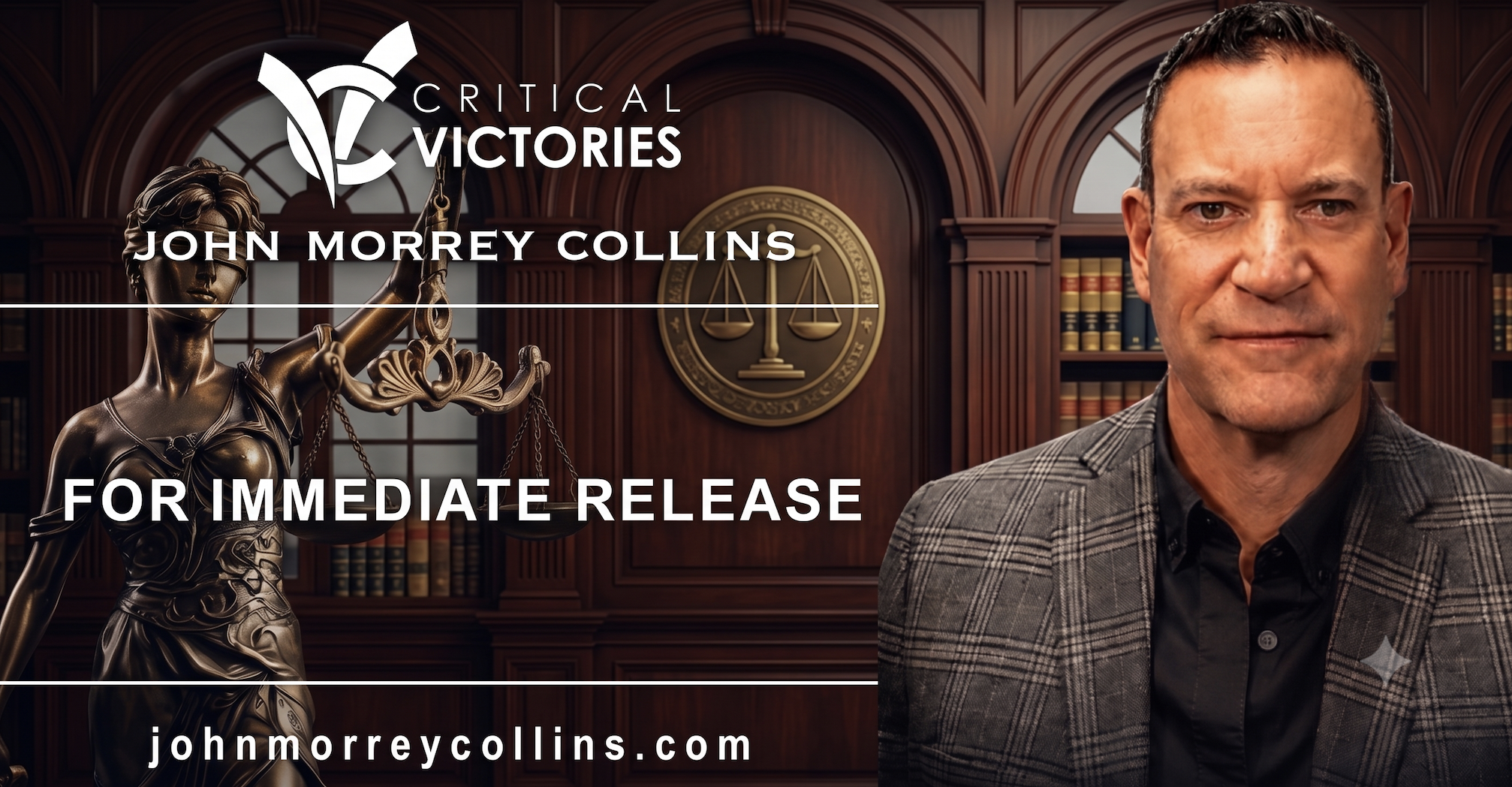

Memorandum to fourteen national forensic science organizations cites Granillo v. State and outlines ten principles for a professional response
BRIGHTON, MI, UNITED STATES, July 28, 2026 /EINPresswire.com/ — John Morrey Collins, author of the newly released book ‘Valid Comparisons: The Forensic and Judicial Examination of Stochastic Patterns,’ has sent a memorandum to the boards and leadership of fourteen major forensic science organizations, urging them to confront what he describes as a growing and underappreciated threat to the integrity of the criminal justice system: the rise of strategic litigation.
The memorandum, dated July 24, 2026, and addressed to organizations including the American Academy of Forensic Sciences, the American Society of Crime Laboratory Directors, the International Association for Identification, and the Organization of Scientific Area Committees for Forensic Science, examines the Hawaii Supreme Court’s recent decision in Granillo v. State, which vacated a thirty-six-year-old kidnapping and sexual assault conviction after opining that hair and fiber testimony given at the original 1990 trial exceeded what the underlying science could support.
Collins argues that the ruling exemplifies a broader problem in which post-conviction courts evaluate decades-old expert testimony by isolating individual words and phrases rather than considering the full context of the question-and-answer exchange from which they came. He distinguishes this practice from the traditional work of the innocence movement, which he credits with relying on direct evidence of factual innocence, and contrasts it with what is known as ‘strategic litigation’ — an approach that seeks exonerations primarily by disparaging entire categories of forensic evidence as “junk science.”
“A subjective accusation of malpractice is not proof of a professional failure on the part of a forensic expert, nor is it proof of a defendant’s innocence,” Collins writes in the memorandum. “Strategic litigation, as currently practiced, too often substitutes the disparagement of a forensic method for the harder work of establishing fact — and that substitution itself contaminates the truth-seeking process that our justice system depends on.”
The memorandum outlines ten principles that Collins recommends forensic science organizations adopt and reinforce through professional codes of conduct, along with six practical measures for implementation, including internal review requirements before an organization’s name or publications are cited in support of a post-conviction claim, and expanded support for members who are individually named or disparaged in post-conviction proceedings.
Collins is the author of Valid Comparisons (Critical Victories, 2026) and Crime Lab Report: An Anthology on Forensic Science in the Era of Criminal Justice Reform (Academic Press, 2019). He has spoken to forensic science audiences internationally, including a 2015 address to scientists of the FBI Laboratory, and has written extensively on the intersection of forensic science, professional responsibility, and the criminal justice system.
Media Contact:
Shannon Nagy
100 Orndorf Drive #2610
Brighton, MI 48116
(517) 803-4063
www.johnmorreycollins.com
John Morrey Collins Jr
The Office of John Morrey Collins
+1 517-803-4063
email us here
Legal Disclaimer:
EIN Presswire provides this news content “as is” without warranty of any kind. We do not accept any responsibility or liability
for the accuracy, content, images, videos, licenses, completeness, legality, or reliability of the information contained in this
article. If you have any complaints or copyright issues related to this article, kindly contact the author above.

Media gallery

