New GAO Report Shows More Students with Disabilities in General Education, Raising Questions About Inclusion
More students are learning in general education classrooms, but placement alone doesn't determine whether inclusion

Press Release Disclaimer: This is a press release distributed through the XPR Media network. It has not been independently verified by our newsroom.
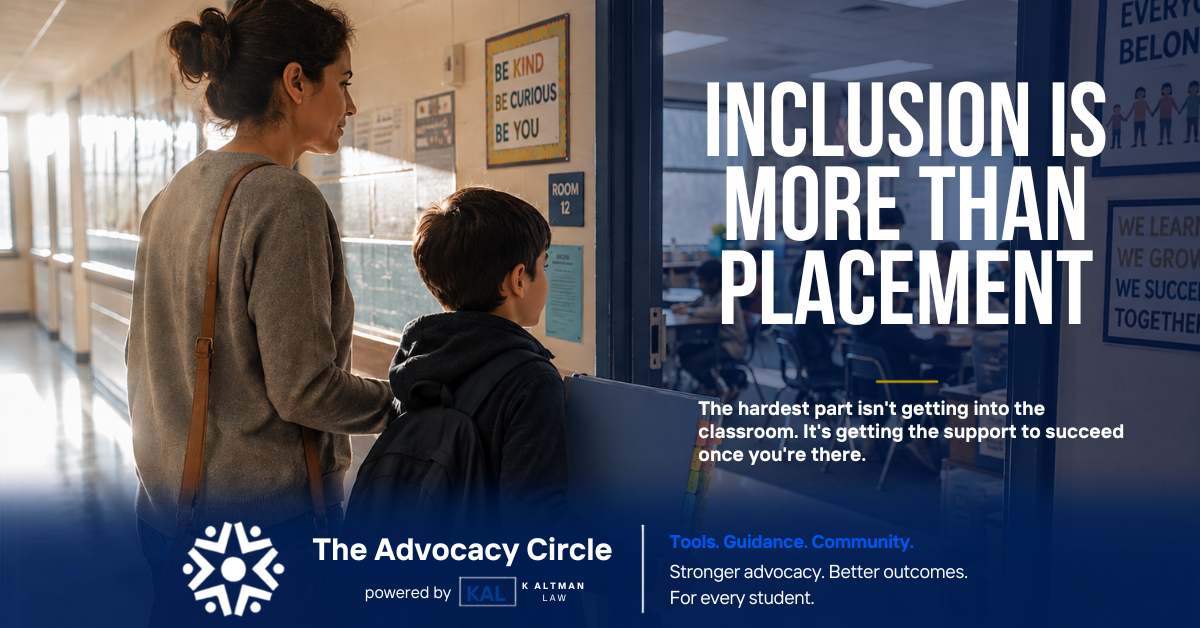

More students are learning in general education classrooms, but placement alone doesn’t determine whether inclusion truly works.
WASHINGTON, DC, UNITED STATES, August 4, 2026 /EINPresswire.com/ — A new report from the U.S. Government Accountability Office shows that more students with disabilities are spending substantial portions of their school day in general education settings, while trends continue to vary widely among states and districts.
According to the GAO, the number of students with disabilities educated in general education classrooms for at least 40 percent of the day increased 25 percent nationally between school years 2012–13 and 2023–24. The report also found that the share of students with disabilities in general education for much of the day increased in 42 states and the District of Columbia, though changes differed significantly across jurisdictions. [You can read about it here.]
Inclusion Must Be Individualized:
Under the Individuals with Disabilities Education Act, students with disabilities are to be educated alongside peers without disabilities to the maximum extent appropriate. The GAO’s findings offer an important national snapshot, but numbers alone cannot explain whether a student has the support, access, and sense of belonging needed to participate meaningfully.
“Inclusion is not simply a location on a schedule,” said Dan Rothfeld, Chief Operating Officer of The Advocacy Circle. “Families deserve clear, practical explanations of what a proposed placement will look like day to day, what support will be available, and how the team will know whether the plan is working for the student.”
The GAO identified several factors that officials said influence educational placement, including resource availability, parental involvement in placement decisions, and school environment. The report also described examples of schools working to build belonging through intentional practices, while noting that resource constraints can create challenges.
What This Means for Families:
National data can help families understand broader trends, but placement remains an individualized team decision. A student’s schedule should be considered alongside the supports, services, instructional strategies, accessibility measures, and communication practices needed for that student to participate and make progress.
Families may consider asking:
• What supports will be available in each setting?
• How will the school support participation in academics, routines, activities, and peer interactions?
• Who will monitor implementation and progress?
• When will the team review whether the placement and supports remain appropriate?
Clear questions help turn broad concepts such as inclusion and belonging into practical planning conversations.
About The Advocacy Circle
The Advocacy Circle is a national education advocacy and family support organization that provides practical tools, training, and AI-supported guidance to help families navigate special education and related advocacy challenges. The Advocacy Circle is not a law firm and does not provide legal advice. Learn more at www.theadvocacycircle.com.
Disclaimer: This release is for general informational purposes only and does not constitute legal advice. Families should seek professional advice regarding their individual circumstances where appropriate.
Dan Rothfeld
The Advocacy Circle
+1 947-366-0021
danrothfeld@theadvocacycircle.com
Visit us on social media:
LinkedIn
Instagram
Facebook
YouTube
Legal Disclaimer:
EIN Presswire provides this news content “as is” without warranty of any kind. We do not accept any responsibility or liability
for the accuracy, content, images, videos, licenses, completeness, legality, or reliability of the information contained in this
article. If you have any complaints or copyright issues related to this article, kindly contact the author above.

Media gallery